Maritime and offshore injuries · Federal law
Short answer: an injured offshore worker’s rights depend first on one question: are you a “seaman”? A seaman can sue the employer under the Jones Act, claim unseaworthiness against the vessel owner, and receive maintenance and cure regardless of fault, with three years to sue. Dockworkers, harbor workers and oil and gas workers on fixed platforms in federal waters are not seamen. They get no-fault compensation under the Longshore Act instead, at two-thirds of their average weekly wage, and must file within one year.
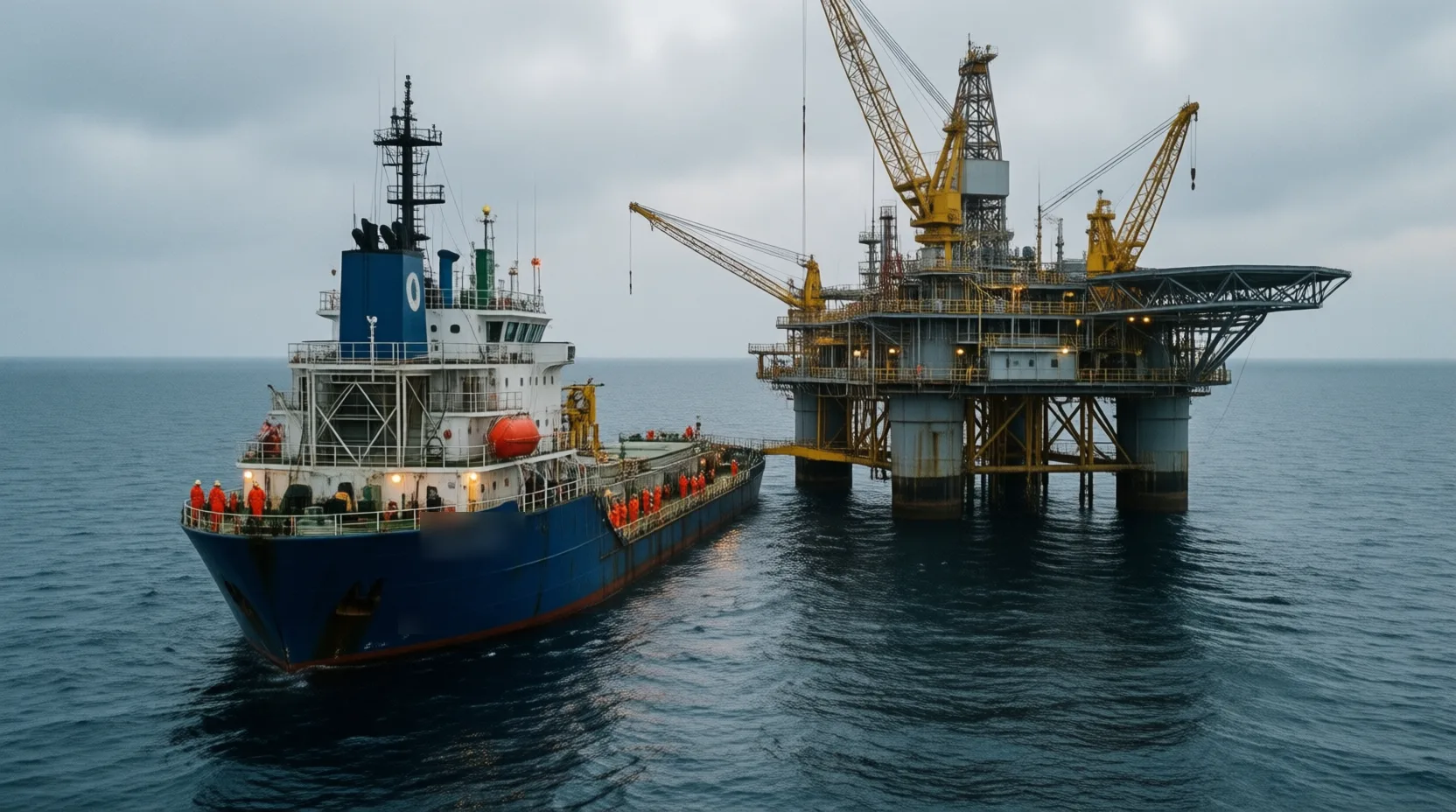
On land, an injured employee usually gets workers’ compensation and cannot sue the employer. At sea, the rules are older and different. A deckhand on a supply boat and a welder on a fixed platform a few hundred yards away can be covered by different federal laws, with different deadlines and very different amounts at stake.
This guide explains how to tell which law covers you, what each one pays, and the deadlines. Each rule links to the statute or the Supreme Court decision. Last checked: October 17, 2026.
Which law covers you
Work through these questions in order. The first “yes” usually decides it.
Are you a crew member of a vessel in navigation? That includes boats, barges, drillships, jack-up rigs and other floating rigs. If you spend a large part of your time working aboard, you are probably a seaman: Jones Act, unseaworthiness, and maintenance and cure.
Do you load, unload, build or repair ships, on the water or on an adjoining dock or shipyard? You are probably covered by the Longshore and Harbor Workers’ Compensation Act (LHWCA).
Do you work on a fixed platform on the outer Continental Shelf, in oil or gas operations? The Outer Continental Shelf Lands Act extends Longshore Act benefits to you.
None of the above? Workers on fixed platforms in state waters, and many others near the water, usually fall under state workers’ compensation.
The boundaries are fought over in court all the time, and the answer can change the value of a claim several times over. Treat this as a starting point, not a verdict.
Who counts as a seaman
The Jones Act does not define “seaman”. The Supreme Court did, in Chandris, Inc. v. Latsis (1995). A seaman must meet two tests:
- The job contributes to the vessel’s function or mission. Captains and deckhands, but also cooks, engineers, and rig hands on a floating drilling unit.
- The worker has a connection to a vessel, or an identifiable fleet of vessels, that is substantial in duration and in nature. The Court gave a rule of thumb: a worker who spends less than about 30 percent of their time in the service of a vessel in navigation should not qualify.
The 30% figure is a guideline, not a law. Courts look at the whole job, not one voyage. A worker who is reassigned to a vessel permanently can become a seaman on the first day of the new job.
Some workers are excluded by statute. Aquaculture workers are not seamen for Jones Act purposes when state workers’ compensation is available to them and they were injured where they had lawful access (46 U.S.C. § 30104(b)).
The three claims a seaman can bring
1. Jones Act negligence (against the employer)
The Jones Act lets a seaman injured on the job sue the employer, with a jury trial. It adopts the law that governs injured railroad workers, the Federal Employers’ Liability Act. Two consequences matter:
- The employer is liable if its negligence caused the injury “in whole or in part” (45 U.S.C. § 51). Courts treat this as an easier standard of proof than in an ordinary injury case.
- The seaman’s own carelessness does not bar the claim. It reduces damages “in proportion to the amount of negligence attributable to” the worker (45 U.S.C. § 53). This is pure comparative fault. There is one exception: if the employer violated a safety statute that contributed to the injury, the worker’s share of fault does not reduce the award at all. Compare the state fault rules, where a worker found 51% at fault could get nothing in many states.
2. Unseaworthiness (against the vessel owner)
A vessel owner must provide a vessel, equipment and crew reasonably fit for their intended use. A slippery deck, a frayed line, a missing guard or an undermanned crew can make a vessel unseaworthy. The owner does not have to have been careless: the condition is enough, if it caused the injury.
Punitive damages are not available on this claim. The Supreme Court decided that in Dutra Group v. Batterton (2019).
3. Maintenance and cure (no fault needed)
A seaman who becomes injured or ill while in the service of the vessel is entitled to maintenance (a daily amount for food and lodging while recovering ashore) and cure (medical care). The employer owes them whether or not anyone was at fault.
- They last until the seaman reaches “maximum cure”, the point where more treatment will not improve the condition.
- The daily rate is often set in a union contract or proven from the seaman’s actual living costs. It is not a wage.
- An employer that willfully refuses to pay can owe punitive damages, as the Supreme Court held in Atlantic Sounding Co. v. Townsend (2009).
Maintenance covers living costs, not lost earnings. Without proof of fault, a seaman can also recover the wages they would have earned until the end of the voyage or contract period (“unearned wages”). Lost wages beyond that, pain and suffering and future earning capacity come from the Jones Act and unseaworthiness claims. A seaman who settles maintenance and cure has not settled those.
Longshore, harbor and platform workers
The Longshore Act covers workers in “maritime employment” injured on navigable waters or on an adjoining pier, dock, terminal or shipyard area. Its definition of employee expressly excludes “a master or member of a crew of any vessel” (33 U.S.C. § 902(3)(G)), so a worker is either a seaman or a Longshore worker, not both.
- No-fault benefits. Medical care, plus compensation for disability: 66⅔% of the average weekly wage for total disability (33 U.S.C. § 908), within a maximum of twice the national average weekly wage (§ 906(b)).
- No suit against the employer. As with state workers’ comp, the benefits replace a negligence suit against your own employer.
- A suit against the vessel is still possible. If a vessel’s negligence caused the injury, the worker can sue the vessel as a third party (33 U.S.C. § 905(b)).
For oil and gas workers on the outer Continental Shelf, the Outer Continental Shelf Lands Act (43 U.S.C. § 1333(b)) extends the same Longshore Act benefits. Crew members of vessels are excluded from that extension too.
Seaman vs. Longshore worker, side by side
| Seaman | Longshore / OCS worker | |
|---|---|---|
| Main law | Jones Act + general maritime law | Longshore Act (LHWCA), extended by OCSLA |
| Sue own employer? | Yes, for negligence | No: compensation instead |
| Fault needed? | For Jones Act negligence. Not for unseaworthiness (an unfit condition is enough) or maintenance and cure | No, for compensation benefits |
| Own fault | Reduces damages, never bars them | Does not reduce compensation |
| Pain and suffering | Yes, in the negligence and unseaworthiness claims | No (only against a third party, such as a negligent vessel) |
| Deadline | 3 years | 30 days notice, 1 year claim |
Deadlines
- Seamen: a civil action for personal injury or death from a maritime tort “must be brought within 3 years after the cause of action arose” (46 U.S.C. § 30106). This federal deadline applies wherever you live, instead of the state deadlines.
- Longshore Act: written notice of the injury within 30 days, to the Labor Department’s district director and to the employer (33 U.S.C. § 912), and a claim within one year after the injury, or one year after the last voluntary payment (33 U.S.C. § 913). Both clocks start later if the worker did not know the injury was work-related.
The 30-day Longshore notice is easy to miss while you are still in treatment. The rules also differ for occupational diseases, such as hearing loss or asbestos illness. Report the injury in writing right away, and keep a copy.
Deaths at sea
If a seaman dies from a work injury, the personal representative can bring the Jones Act claim on behalf of the family. For a death on the high seas more than 3 nautical miles from the U.S. shore, the Death on the High Seas Act applies: the personal representative sues for the benefit of the spouse, parent, child or dependent relative. Recovery is limited to “pecuniary loss”, meaning financial support and services, not grief (§ 30303). Deaths in commercial aviation accidents more than 12 nautical miles out are an exception: there, damages for loss of care, comfort and companionship can also be recovered (§ 30307).
Questions
Is the Jones Act the same as workers’ compensation?
No. Workers’ comp pays fixed benefits without proof of fault and bars a suit against the employer. The Jones Act is a right to sue the employer for negligence, before a jury, for full damages. Maintenance and cure is the part that works like no-fault benefits.
Can I be fired for filing a Jones Act claim?
Federal law protects seamen against being fired or punished for reporting a work injury to the vessel owner, or a safety violation to the Coast Guard (46 U.S.C. § 2114). Keep written records of the report and of anything that happens after it.
Does the Jones Act cover passengers on a cruise ship?
No. The Jones Act is for seamen. Passengers bring general maritime negligence claims, and their ticket contract can shorten the deadlines: on seagoing ships, federal law allows it to require written notice within 6 months and a lawsuit within 1 year (46 U.S.C. § 30526).
How are maritime injury lawyers paid?
Usually on contingency, like other injury lawyers. See how contingency fees work.
- 46 U.S.C. §§ 30104 (Jones Act), 30106 (time limit), 30302–30303 (DOHSA).
- 33 U.S.C. §§ 902, 903, 905, 906, 908, 912, 913 (Longshore and Harbor Workers’ Compensation Act), and 43 U.S.C. § 1333(b) (OCSLA), linked above.
- 45 U.S.C. §§ 51 and 53 (Federal Employers’ Liability Act, applied by the Jones Act).
- Chandris, Inc. v. Latsis, 515 U.S. 347 (1995); Atlantic Sounding Co. v. Townsend, 557 U.S. 404 (2009); Dutra Group v. Batterton, 588 U.S. 358 (2019).
Related guides
- Truck accident liability and federal rules.
- Personal injury deadlines by state.
- How contingency fees work.
General information, not legal advice. Seaman status and coverage are decided case by case. Ask a licensed maritime attorney about your situation.