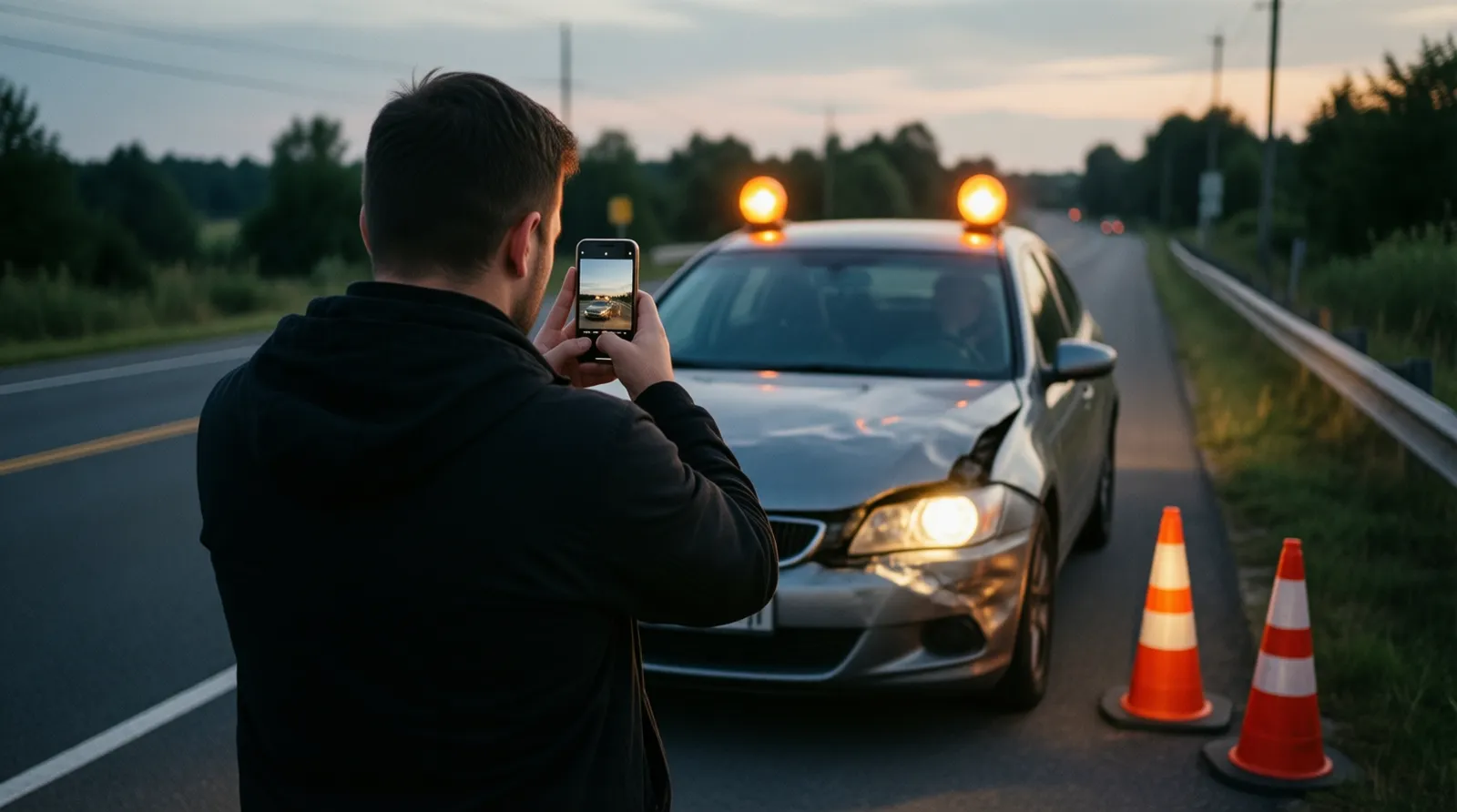
After a crash · Checklist
Short answer: stop, get safe, call 911 if anyone is hurt, and exchange driver and insurance details. Photograph everything before the cars move, if that is safe. Get a medical check within days. Then report the crash to your insurer and, where your state requires it, to the DMV. Two deadlines catch people out: Florida’s 14-day window to get treated under PIP, and DMV report deadlines that can be 10 days or less.
Most checklists stop at the roadside. The claim is usually won or lost later, in deadlines and paperwork. This guide covers both: the scene, then the first 30 days.
At the scene
- Stop. Leaving the scene of a crash that injured someone is a crime. In California it can be a felony under Vehicle Code § 20001.
- Get out of traffic if you can. Hazard lights on. If the car can be driven and nobody is hurt, many states want it moved off the travel lanes. If you are hurt or unsure, stay put and stay buckled until help arrives.
- Call 911 if anyone is injured. Do not move an injured person unless there is fire or another immediate danger. The 911 call also creates a time-stamped record.
- Exchange information. Names, phone numbers, driver’s license numbers, plates, insurance company and policy number. Photograph the other driver’s license and insurance card rather than copying them by hand.
- Ask for a police report. Officers do not attend every minor crash. If they come, write down the officer’s name, badge number and the report number before you leave.
Evidence worth collecting
Evidence at the scene is gone within hours. Cars are towed, debris is swept up, witnesses leave. A phone is enough. Take more photos than you think you need:
- All vehicles from four corners, then close-ups of the damage.
- Where the cars came to rest, before they are moved, if it is safe.
- Skid marks, debris, traffic lights, stop signs and anything blocking the view.
- Road and weather conditions.
- Visible injuries, that day and again over the following days as bruises develop.
Then two things nobody photographs. First, ask witnesses for a phone number, not just a name. Second, look for cameras: shops, homes with doorbell cameras, buses. Much of that footage is recorded over within days, so ask the owner that same day.
Before you sleep, write what happened: time, direction of travel, speed, what you saw and heard, what the other driver said. A note made the same day carries weight months later, when memory has blurred.
What to say, and what not to
Be polite and stick to facts. Do not argue about who caused it. Do not say “I’m fine” before you have been checked, since adrenaline hides pain. Avoid “sorry” when it means fault rather than sympathy. In most states fault is shared in percentages and your share reduces what you can recover. In Alabama, Maryland, North Carolina, Virginia and DC, any fault on your part can bar the claim entirely. The comparative negligence table shows how your state does it.
The other driver’s insurer will probably call within days and ask for a recorded statement. You are not required to give one to the other side’s insurer. Your own policy is different: it usually obliges you to cooperate with your insurer. Read the “duties after an accident” section of your policy.
The first 30 days
- See a doctor within days, even if you feel fine. Whiplash and concussion symptoms can appear a day or two later. A gap between the crash and the first visit is the first thing an adjuster will question.
- Tell your insurer promptly. Policies require prompt notice, whoever was at fault.
- File the DMV report if your state requires one. See the deadlines below.
- Keep a file. Medical bills, receipts, mileage to appointments, repair estimates, days missed from work and a short pain diary.
- Stay off social media about the crash. Insurers look. A photo at a barbecue can be used to argue you were not hurt.
Deadlines people miss
| Deadline | Where | What the rule says |
|---|---|---|
| 14 days | Florida | Personal injury protection (PIP) pays medical benefits only if you receive initial treatment within 14 days of the crash. Fla. Stat. § 627.736(1)(a) |
| 5 days | Pennsylvania | If police did not investigate a crash that injured or killed someone or left a car unable to be driven, the drivers must report it to PennDOT on form AA-600 within 5 days. 75 Pa.C.S. § 3747 |
| 10 days | California | Report to the DMV on form SR-1 if anyone was injured, however slightly, or killed, or if property damage to any one person is over $1,000. This is separate from any police report. California DMV |
| 10 days | New York | Report to the DMV on form MV-104 if anyone was injured or killed, or if property damage to any one person is over $1,000. N.Y. Veh. & Traf. Law § 605 |
| 30 days | New York | No-fault claims: written notice to the insurer within 30 days of the accident, unless you give a written, reasonable justification for the delay. 11 NYCRR 65-1.1 |
| 1 to 6 years | Every state | The statute of limitations for an injury lawsuit. Miss it and the claim is usually dead. Table by state |
If a government vehicle or a dangerous public road was involved, many states require a formal notice of claim within months, not years. California, for example, gives six months for injury claims under Government Code § 911.2. People miss it because they assume they have years.
When to talk to a lawyer
For a fender-bender with no injuries, your insurer can usually handle it. Talk to a lawyer if any of these apply:
- Someone was seriously hurt, or treatment lasts more than a few weeks.
- Fault is disputed, or the other driver changed their story.
- A government vehicle, a commercial truck or a rideshare was involved.
- The insurer offers a quick settlement before you know the extent of your injuries.
- Any deadline above is getting close.
Injury lawyers usually offer a free first consultation and work on a percentage. Before you sign, read how contingency fees work. It explains what the percentage covers and what it does not.
If the crash involved a commercial truck or a motorcycle, some extra rules apply: see truck accident liability, which explains the federal records to secure quickly, and motorcycle helmet laws by state.
This page is general information, not legal advice. Rules vary by state and change; check your state’s statute or ask a licensed attorney about your case.
- California Vehicle Code § 20001 and Government Code § 911.2.
- California DMV, Report of Traffic Accident Occurring in California (SR-1).
- New York Vehicle and Traffic Law § 605; 11 NYCRR 65-1.1 (mandatory personal injury protection endorsement).
- Florida Statutes § 627.736.